
![[Nieuw 2027] Dukawey FUGL Pro](http://www.gleecycle.com/cdn/shop/files/product_image_fuglpro_1.webp?v=1792461352&width=1200)


Auto's en e-bikes zijn geen concurrenten, maar complementaire oplossingen voor stedelijke mobiliteit. Beide zijn uitstekende vervoermiddelen — voor dagelijkse ritten binnen 10 km blinken e-bikes vaak uit in flexibiliteit, zuinigheid en gezondheidsvoordelen; terwijl auto's betrouwbare partners blijven voor lange afstanden, groepsreizen en comfort onder alle weersomstandigheden. Slimme forenzen weten hoe ze beide kunnen combineren op basis van de situatie, zodat elke rit precies goed is.

-
Glijdt moeiteloos door fietspaden en zijstraten (
-
Auto
Conclusie: Voor woon-werkverkeer binnen 10 km is de constante reistijd van een e-bike vaak betrouwbaarder dan de "theoretische topsnelheid" van een auto. Beide samen gebruiken — fietsen wanneer het weer en je energie het toelaten, autorijden wanneer je haast hebt of het weer slecht is — is de optimale oplossing voor woon-werkefficiëntie.
| Kostenpost | Auto (jaarlijks) | Stads E-Bike (jaarlijks) |
|---|---|---|
| Aanschaf | Nieuwe EU-auto gemiddeld ca. €25,000–€35,000, doorgaans 20%–30% afschrijving in het eerste jaar, dus de bezitskosten zijn hoog. | E-bike prijzen variëren meestal van €800–€3,500, met relatief lage afschrijving, gemiddeld ongeveer €150–€400 per jaar. |
| Brandstof/Energie | EU-gemiddelde brandstofprijs ~€1,97/liter, tot €2,34/liter in Nederland. | Een volledige lading kost slechts €0.10–0.25, jaarlijkse energiekosten van €30–50 zijn ruim voldoende. |
| Parkeren | Parkeerkosten in grote Europese steden blijven stijgen. In Nederland bijvoorbeeld heeft straatparkeren in het centrum van Amsterdam €8,05/uur bereikt, en een hele dag parkeren in centrale gebieden kost vaak meer dan €60. Sommige langparkeeropties kunnen €195–340 per maand kosten. | Openbaar parkeren voor e-bikes is meestal gratis; speciale fietsparkeerplaatsen of langdurige stalling kunnen kosten met zich meebrengen. |
| Congestieheffing / Milieuzone | Steden leggen boetes op voor het betreden van milieuzones zonder de juiste vergunningen; bijvoorbeeld in de Franse ZFE-zones leidt het ontbreken van een Crit'Air-sticker doorgaans tot een boete van ongeveer €68. Sommige steden (bijv. London Congestion Charge) vereisen ook dagelijkse toegangspasjes. | Niet van toepassing – overal gratis te berijden. |
| Verzekering | Autoverzekering in Europa kost ongeveer €300–€800 per jaar en kan in landen als Italië oplopen tot meer dan €1,000. Een basis-WA-verzekering is verplicht voor alle voertuigen. | De meeste Europese landen vereisen geen verplichte verzekering; zelfs een vrijwillige verzekering kost slechts €30–80/jaar. |
| Onderhoud & Reparaties | Jaarlijkse onderhouds- en reparatiekosten voor een auto liggen doorgaans tussen €300–€1,200. |

-
E‑Bike is een van de meest energiezuinige voertuigen, produceert vrijwel geen directe CO2-uitstoot en verbruikt zeer weinig grondstoffen (de lithiumbatterij gebruikt slechts ongeveer 1/100 van die van een elektrische auto).
-
Auto elektrificeert snel; hybride en volledig elektrische modellen verminderen de uitlaatemissies aanzienlijk en blijven onmisbaar voor langeafstandsreizen.
Het gebruik van e-bikes voor korte ritten binnen 10 km kan de hoge uitstoot van benzineauto's tijdens koude starts en korte ritten effectief verminderen, wat een groene aanvulling vormt op elektrische voertuigen. De twee zijn geen vervangers; samen maken ze steden schoner.
4. Gezondheid & Leven: Laat mobiliteit het leven dienen
-
-
Autorijden biedt bescherming onder alle weersomstandigheden, zodat u comfortabel en op uw gemak blijft, zelfs wanneer u moe bent, haast heeft of veel spullen meeneemt.
De ideale situatie is: op zonnige dagen wanneer u zich energiek voelt, geniet van een verfrissende rit van 10 km op uw e-bike; bij zware regen, extreme hitte of wanneer u gezinsleden moet ophalen, stap dan met gemak in de auto. Vervoermiddelen moeten het leven dienen, niet beperken.
5. Combineren van beide is de optimale oplossing
Voor kort stedelijk woon-werkverkeer biedt de e-bike een uiterst aantrekkelijke keuze met zijn uitgebreide voordelen op het gebied van efficiëntie, zuinigheid en gezondheid. Het gaat niet om het elimineren van de auto, maar om het toevoegen van een groene, flexibele en vreugdevolle optie aan moderne mobiliteit. De auto blijft een betrouwbare partner, die een onvervangbare rol speelt over langere afstanden en in complexere situaties.
Als u op zoek bent naar een efficiëntere en voordeligere manier om in de stad te forenzen, is een e-bike zeker het overwegen waard. De Dukawey Fugl 3.0 stads e-bike is bijvoorbeeld speciaal ontworpen voor stedelijk rijden en combineert efficiëntie met comfort voor uw woon-werkverkeer.
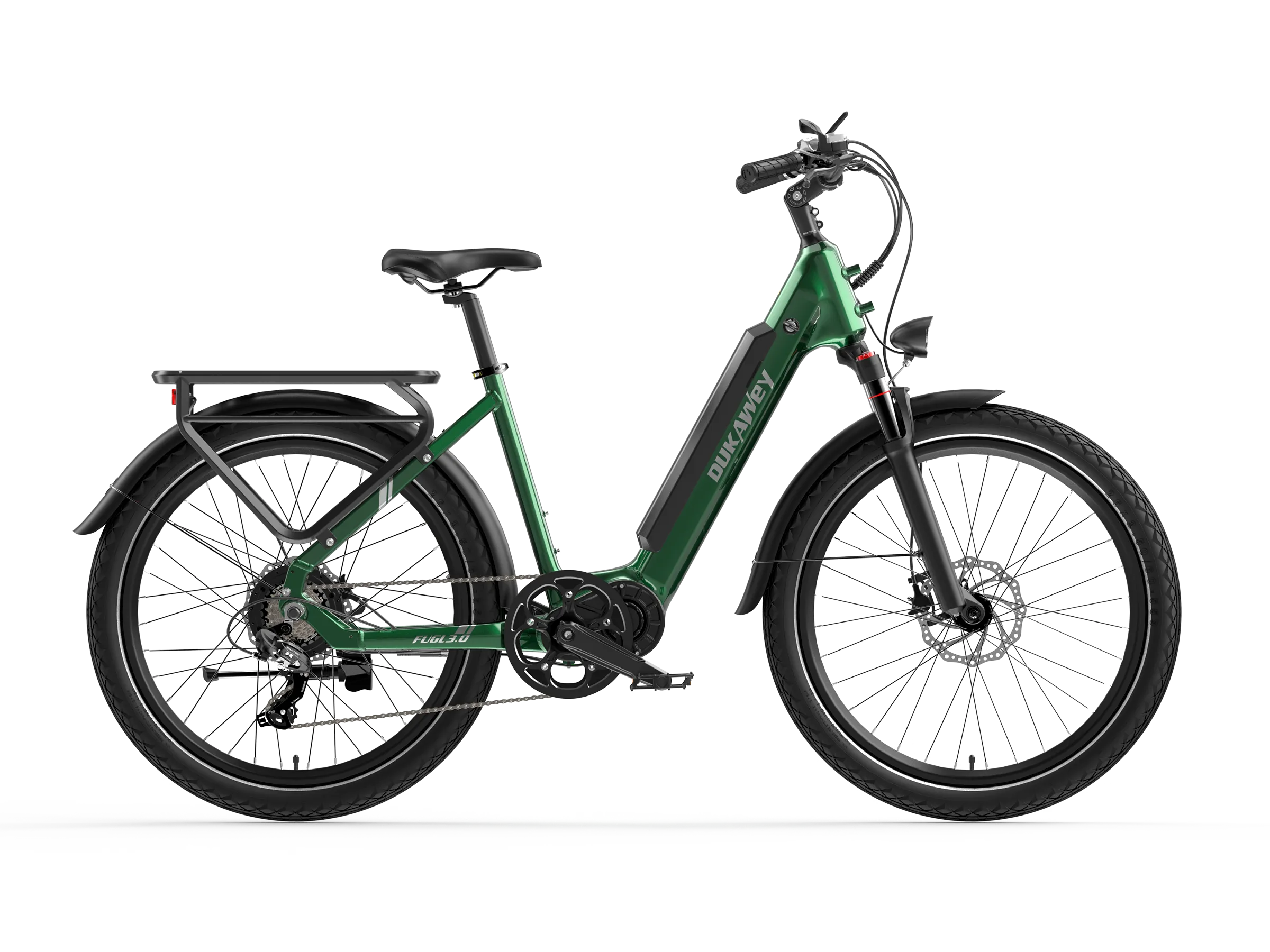
Dukawey FUGL3.0 Stads E-Bike
Dukawey FUGL3.0 — Een comfortabele e-bike die stedelijke hellingen moeiteloos overwint.
meer informatie